About Natalina Martiniello, Ph.D., CVRT
Welcome to my lab page! Please feel free to explore, learn more about my research program and team, and contact me if you are interested to know more.
I am an assistant professor in blindness and low vision rehabilitation at the School of Optometry at the Université de Montréal. My academic training spans the fields of education and rehabilitation. I hold a B.A. in English Literature and Educational Studies from McGill University and an M.Sc. and Ph.D. in Vision Science, with a specialization in Visual Impairment and Rehabilitation, from the Université de Montréal. Before pursuing a research career, I worked as a Certified Vision Rehabilitation Therapist, teaching braille and non-visual access technologies to learners who are blind or have low vision. Following my doctoral studies, I completed a CIHR Health Systems Impact Postdoctoral Fellowship in the Concordia Vision Labs at Concordia University.
I lead a research program centered on advancing braille learning and literacy throughout adulthood, non-visual accessibility and inclusive participation for people who are blind or low vision, which has been recognized through the FRQ Chercheuses Boursières Research Scholar J1 career award.
As a blind researcher and lifelong braille reader, I credit much of my journey to the positive experiences and role models I was fortunate to have early in life. I believe that perceptions about blindness are often far more disabling than blindness itself, and this continues to shape my research, teaching and overall perspective. Over the years, I have had the privilege to learn from and work alongside outstanding leaders in braille and accessibility around the world. I equally enjoy connecting with new students who share these research interests. If you’re a student interested in pursuing a research-based Masters, Ph.D. or Postdoctoral fellowship in Vision Science (blindness and low vision rehabilitation) and have research interests that align with my lab, you are welcome to contact me to start a conversation.
Community leadership
I serve as the Chair of Research for the International Council on English Braille, Assistant Director of the Vision, Access and Participation axis of the Vision Science Research Network, researcher affiliated with the Centre for Interdisciplinary Research in Rehabilitation of Greater Montreal, a Past President of Braille Literacy Canada, subject-matter expert for the Academy for the Certification of Vision Rehabilitation and Educational Professionals, and a member of the editorial board of the British Journal of Visual Impairment.
Teaching
In addition to research, I also teach alongside other faculty in the Graduate program in Vision Rehabilitation. Courses I teach include:
Introduction to Rehabilitation Services for Individuals with Visual impairments
Braille and visual impairment
Introduction to Assistive Technologies for Visual Impairment
Computer-based Assistive Technologies for Visual Impairment
Assessment Strategies in VRT
Beyond Research
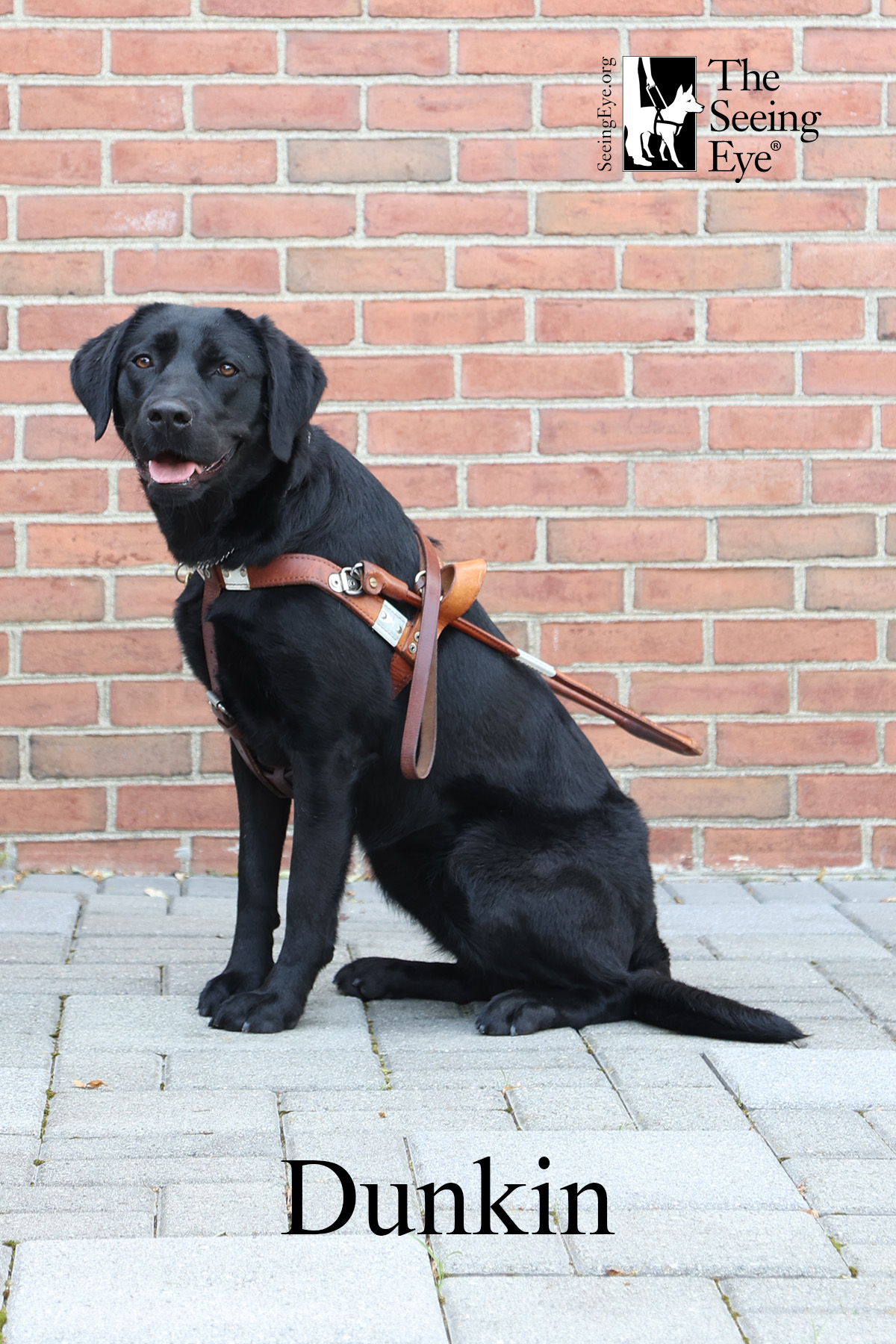
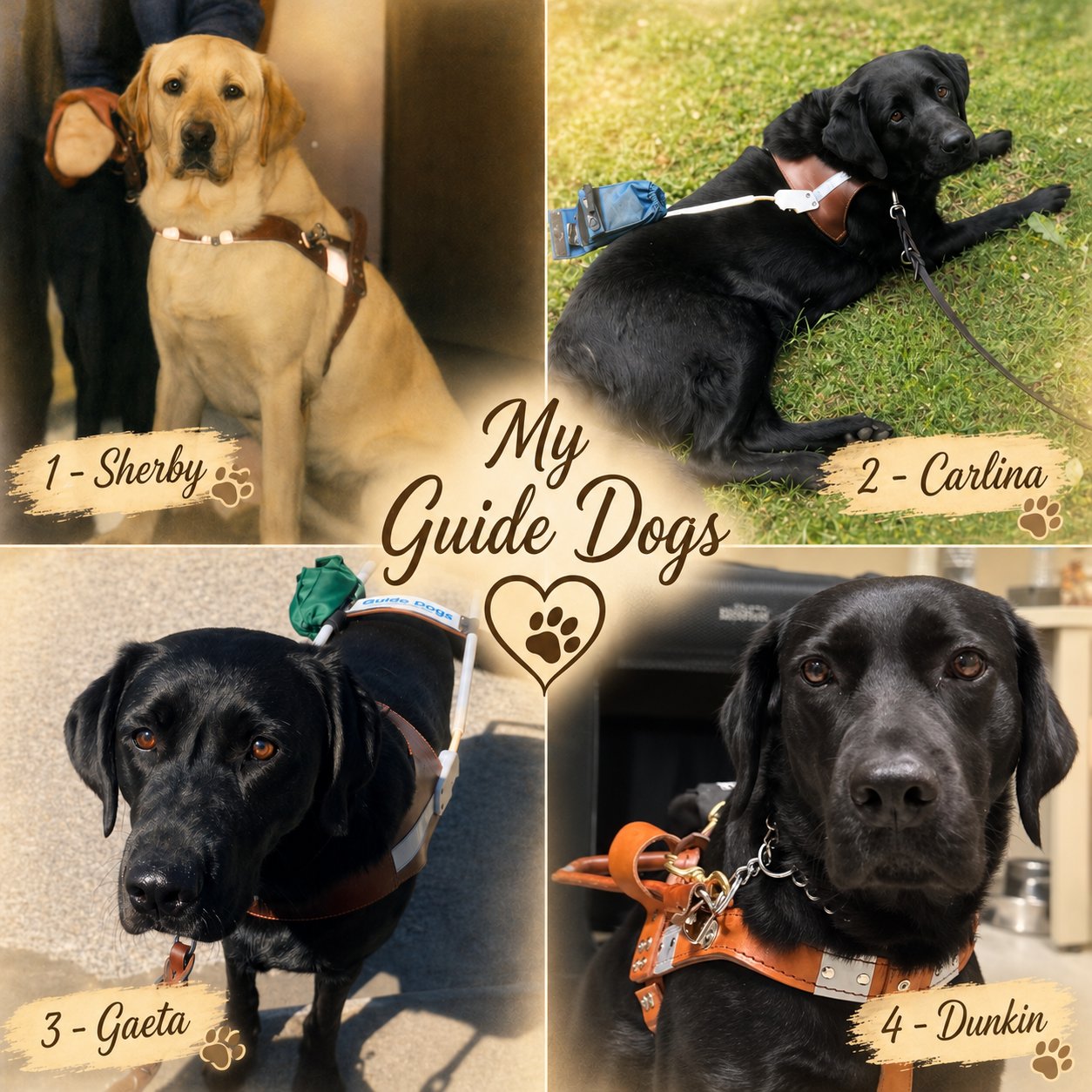
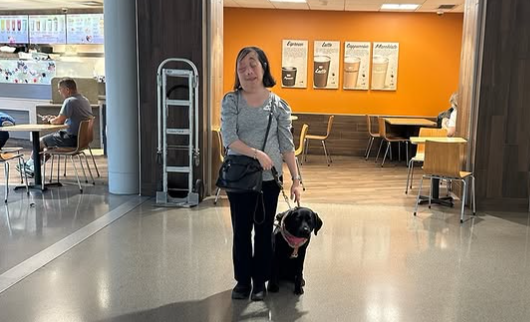
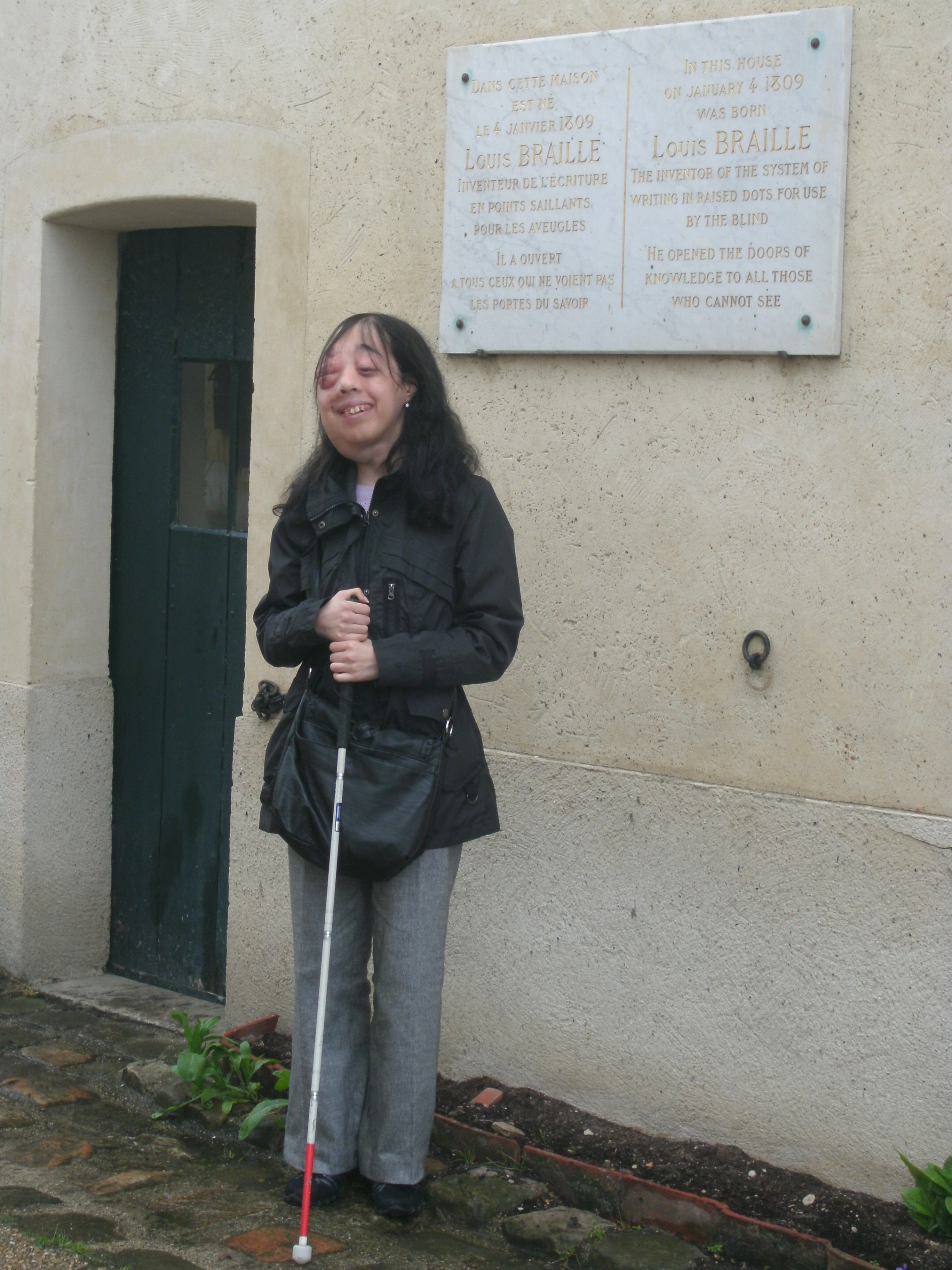
I am accompanied by my Seeing Eye® dog Dunkin, a female black lab who is my fourth guide dog. Beyond research, I enjoy writing, spending time with family, and traveling. One of my most memorable trips was to Coupvray, France, where I visited the childhood home of Louis Braille, creator of the braille system that I and millions of other blind people use every day.
Each of my guide dogs has accompanied me through a different chapter of my life:
Sherby, a female yellow lab, accompanied me throughout college and my undergraduate studies.
Carlina, a female black lab, accompanied me throughout my graduate and Ph.D. studies.
Gaeta, a female black lab, accompanied me throughout my postdoctoral fellowship and early faculty days.
Dunkin, a female black lab, is my current guide, accompanying me everywhere and anywhere with joy, confidence and pride.