
UdeMnouvelles: Braille, an Underutilized Tool in Orientation and Mobility
Originally published in UdeMnouvelles
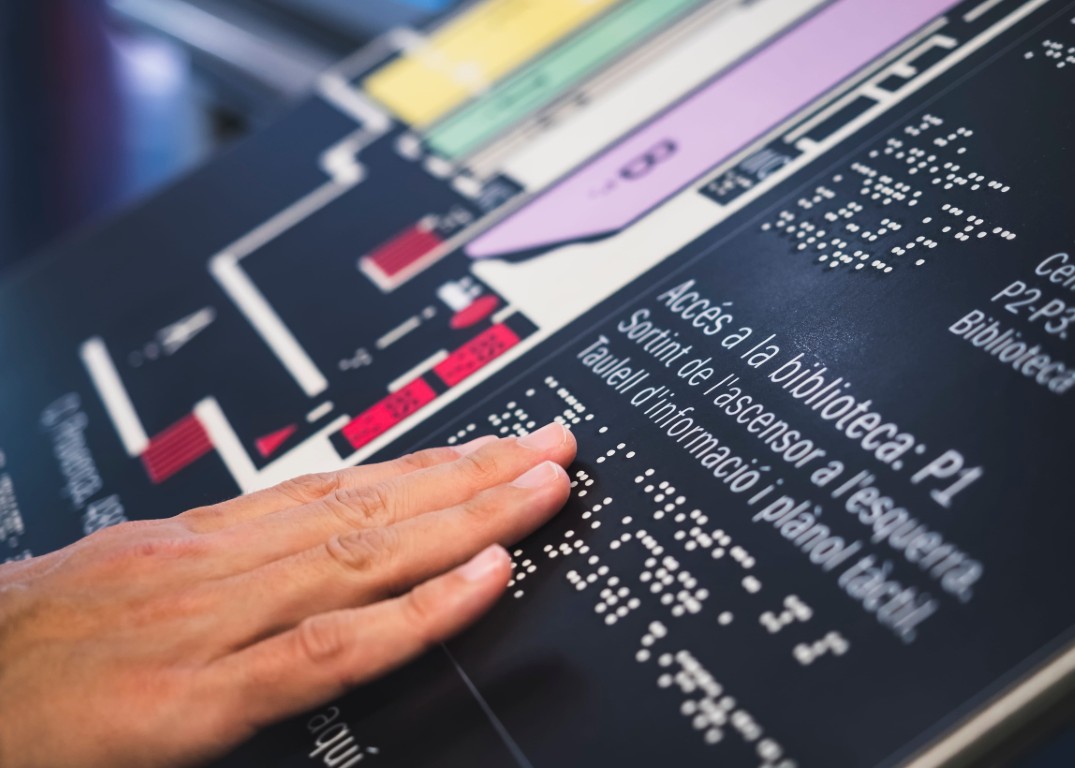
UdeMnouvelles has covered a study by Joseph Paul Nemargut, Marie Mansour and Natalina Martiniello on how orientation and mobility (O&M) specialists use braille in their practice, published in the British Journal of Visual Impairment in January 2026.
Surveying 44 O&M specialists in Canada and the United States, the study found that 84 per cent rarely or never use braille in their practice. That figure rises to 90 per cent among specialists working exclusively with adults, compared with 44 per cent among those working only with children. Fifty-nine per cent said they were dissatisfied with the braille training they received at university. O&M specialists agree that braille is important, but participants suggest that they use it more with children.
While adults who learned braille in childhood may not require the same level of support to incorporate braille into daily life, these findings highlight a gap for the growing number of adults who experience a gradual decline in vision. Adults who have meaningful opportunities to learn and use braille earlier in their vision loss journey are better prepared to draw on those non-visual skills as their vision changes. O&M specialists play a critical role in highlighting how non-visual skills, including the use of braille for public signage, route instructions and tactile graphics, can enhance independent travel.